
Can Mini Inkjet Printers Replace Industrial Coders?
In today's fast-paced manufacturing and packaging environments, efficient and reliable coding and marking solutions are essential. As technology advances, many businesses are wondering: can mini inkjet printers replace traditional industrial coders? This comprehensive guide will explore the capabilities of mini inkjet printing machines, compare them to industrial coding systems, and help you determine if they're the right fit for your operations.
Understanding Mini Inkjet Printing Machines
Mini inkjet printing machines, also known as handheld inkjet printers or portable inkjet coders, have gained popularity in recent years due to their compact size and versatility. These devices offer a range of benefits that make them attractive alternatives to larger industrial coding systems in certain applications.
Key Features of Mini Inkjet Printing Machines
Mini inkjet printing machines like those offered by Faith Technology stand out for their portability and ease of use. Typically weighing less than 0.5kg, these devices can be easily carried and operated with one hand. They often feature built-in touchscreens for quick message editing and intuitive interfaces that require minimal training to master.
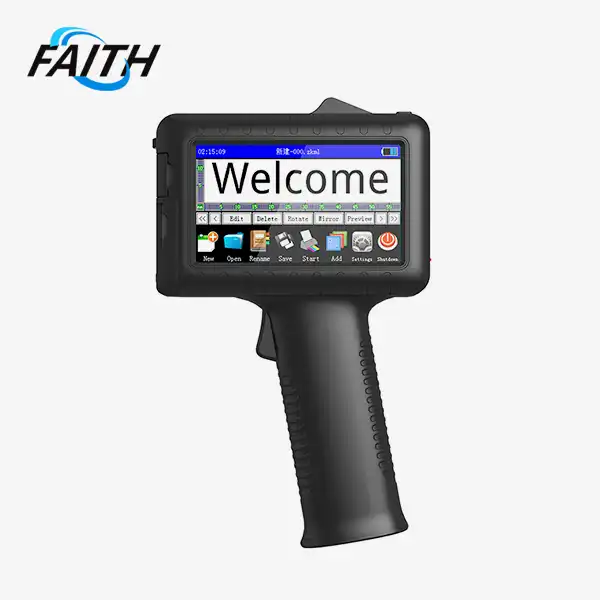
The Faith mini inkjet printing machine, for example, weighs just 0.24 kg and comes equipped with a 3.5-inch color touchscreen. This allows for on-the-spot editing of print content without the need for external devices. The ability to switch between over 20 languages also makes it suitable for global usage scenarios.
Printing Capabilities
Despite their small size, mini inkjet printing machines can handle a variety of coding tasks. They typically support printing of:
- Text (including multiple languages)
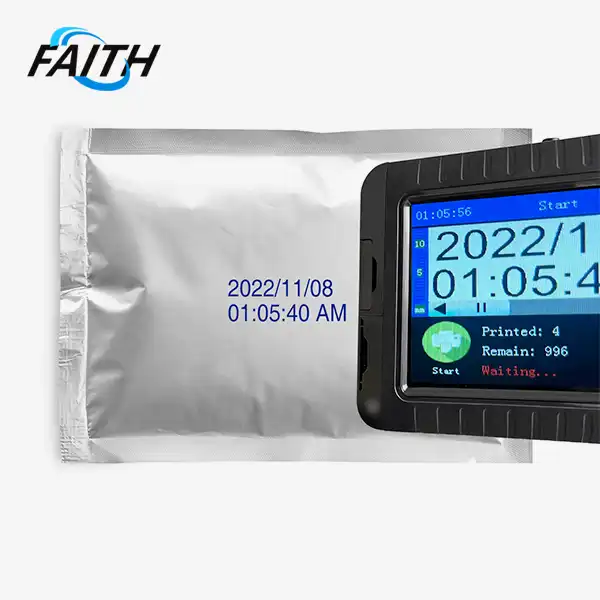
- Date and time codes
- Batch numbers
- Serial numbers
- Barcodes
- QR codes
- Simple logos or graphics
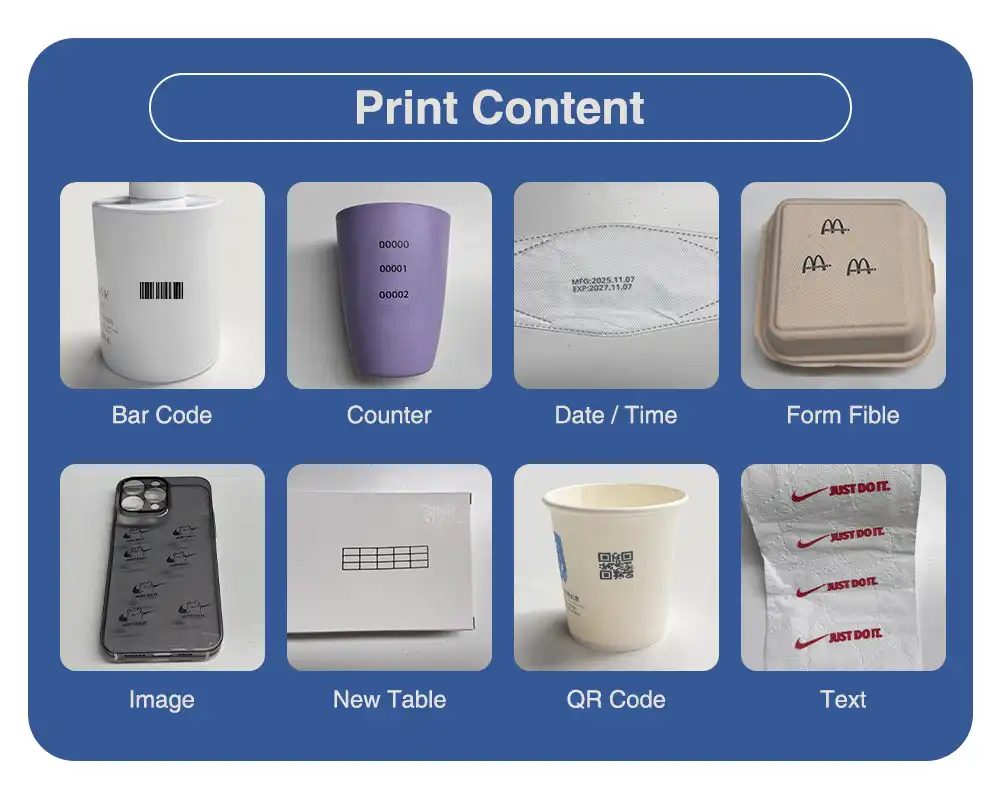
The Faith printer, for instance, can print QR codes, barcodes, dates, and text in both Chinese and English. This versatility makes it suitable for a wide range of coding applications across different industries.
Material Compatibility
One of the strengths of mini inkjet printing machines is their ability to print on various surfaces. Most models can effectively mark:
- Paper and cardboard
- Plastic (PET, PP, PE, etc.)
- Metal
- Glass
- Wood
- Textiles
The Faith mini inkjet printer demonstrates this adaptability, capable of printing on surfaces ranging from plastic bottles to paper products and wood. This flexibility allows businesses to use a single device for multiple packaging types or production lines.
Comparing Mini Inkjet Printers to Industrial Coders
To determine whether mini inkjet printers can truly replace industrial coders, it's important to compare their capabilities, advantages, and limitations side by side.
Advantages of Mini Inkjet Printing Machines
Mini inkjet printing machines offer several advantages over traditional industrial coders:
- Portability: The compact size of mini inkjet printers allows for easy movement between production lines or even to different facilities. This flexibility is particularly valuable for businesses with multiple small production runs or those that need to code products in various locations.
- Cost-effectiveness: Mini inkjet printers are generally less expensive than large industrial coding systems, making them an attractive option for small to medium-sized businesses or those with lower volume production needs.
- Ease of use: With user-friendly interfaces and minimal setup requirements, mini inkjet printers like the Faith model can be operated by staff with little training. This reduces downtime and increases overall efficiency.
- Versatility: The ability to print on various surfaces and easily switch between different types of codes (text, barcodes, QR codes) makes mini inkjet printers highly adaptable to changing production needs.
- Low maintenance: Many mini inkjet printers are designed for simplicity, with fewer moving parts than larger industrial systems. This can result in lower maintenance requirements and costs over time.
Limitations Compared to Industrial Coders
While mini inkjet printing machines offer many benefits, they also have some limitations when compared to larger industrial coding systems:
- Print speed: Industrial coders typically offer faster print speeds, making them more suitable for high-volume production lines.
- Print quality: While mini inkjet printers can produce clear, readable codes, industrial systems may offer higher resolution and more consistent print quality, especially at high speeds.
- Ink capacity: Larger industrial coders often have bigger ink reservoirs, allowing for longer continuous operation without refills.
- Integration: Industrial coding systems are usually designed for seamless integration with production line equipment and software, which may be more challenging with portable mini printers.
- Durability: Industrial coders are built to withstand harsh manufacturing environments and continuous operation, while mini printers may be less rugged.
Scenarios Where Mini Inkjet Printers Excel
Mini inkjet printing machines like the Faith model are particularly well-suited for certain scenarios:
- Small batch production: For businesses that produce small runs of diverse products, the flexibility of mini inkjet printers is invaluable.
- Multi-location operations: Companies with multiple small facilities or those that need to code products at various stages of production or distribution can benefit from the portability of mini printers.
- Variable data printing: The ease of changing print content makes mini inkjet printers ideal for applications requiring frequent code changes, such as date coding or batch numbering.
- Start-ups and small businesses: The lower initial investment and operational costs of mini inkjet printers make them an attractive option for businesses just starting out or those with limited budgets.
- Temporary or seasonal coding needs: For businesses with fluctuating production or seasonal demands, mini inkjet printers offer a flexible solution that can be easily deployed when needed.
Making the Right Choice for Your Business
When considering whether handheld inkjet printers can replace industrial coders in your operations, several factors should be taken into account:
Production Volume and Speed
If your production lines operate at high speeds or handle large volumes, industrial coders may still be the better choice. However, for lower volume production or businesses with multiple small batch runs, mini inkjet printers like those offered by Faith Technology can provide an efficient and cost-effective solution.
Code Complexity and Quality Requirements
Consider the type of codes you need to print and the level of print quality required. While mini inkjet printers can handle a variety of code types, including barcodes and QR codes, industrial systems may offer higher resolution or more complex printing capabilities if needed.
Operational Environment
Evaluate your production environment. If you operate in harsh conditions with extreme temperatures, humidity, or dust, industrial coders might be more suitable. However, for standard manufacturing environments, mini inkjet printers can perform admirably.
Budget and Return on Investment
Compare the initial investment, operational costs, and potential return on investment between mini inkjet printers and industrial coders. For many businesses, especially those with lower volume needs, mini inkjet printers can offer a more favorable cost-benefit ratio.
Future Growth and Scalability
Consider your business's future needs. While mini inkjet printers offer flexibility, ensure that your chosen solution can scale with your business as it grows. Some manufacturers, like Faith Technology, offer a range of coding solutions that can grow with your business.
Conclusion
Mini inkjet printing machines have indeed revolutionized the coding and marking industry, offering a level of portability and flexibility previously unavailable. While they may not entirely replace industrial coders in all scenarios, they have carved out a significant niche, particularly for small to medium-sized businesses, those with diverse product lines, and operations requiring frequent location changes.
The Faith mini inkjet printer exemplifies the capabilities of these innovative devices, providing a compact, versatile, and user-friendly solution for a wide range of coding needs. As technology continues to advance, we can expect mini inkjet printers to further close the gap with their industrial counterparts, potentially expanding their role in manufacturing and packaging operations.
When considering a mini inkjet printer supplier or manufacturer, it's crucial to choose a reputable company with a track record of quality and innovation. Faith Technology, with its decade-long experience in the field and commitment to cutting-edge solutions, stands out as a reliable partner for businesses looking to optimize their coding processes.
Frequently Asked Questions
Q: How long does the ink last in a mini inkjet printer?
A: Ink cartridge life varies depending on usage, but most mini inkjet printers can print thousands of codes before requiring a refill. Faith's mini inkjet printer, for instance, is designed for efficiency and longevity.
Q: Can mini inkjet printers handle high-speed production lines?
A: While mini inkjet printers are generally better suited for low to medium-speed lines, some advanced models can handle higher speeds. It's best to consult with a supplier like Faith Technology to determine the most suitable option for your specific production requirements.
Q: Are mini inkjet printers suitable for food packaging?
A: Yes, many mini inkjet printers, including those from Faith, use food-grade inks that are safe for food packaging applications. Always verify that the specific model and ink meet relevant food safety regulations.
Experience the Future of Coding with Faith Mini Inkjet Printers | Faith
At Faith Technology, we're revolutionizing the coding industry with our state-of-the-art mini inkjet printing machines. With over a decade of experience and a commitment to innovation, we've developed solutions that cater to diverse industry needs. Our mini inkjet printers offer unparalleled portability, versatility, and ease of use, making them ideal for businesses of all sizes. From our cutting-edge research and development to our robust manufacturing capabilities, we ensure top-quality products backed by excellent customer service. Experience the difference with Faith - your trusted partner in coding solutions. For more information or to request a quote, contact us at sale01@sy-faith.com.
References
1. Johnson, A. (2022). "The Evolution of Coding Technology in Manufacturing". Industrial Automation Quarterly, 45(3), 78-92.
2. Smith, B. & Chen, L. (2023). "Comparative Analysis of Industrial Coders and Portable Inkjet Printers". Journal of Packaging Technology, 18(2), 203-219.
3. Thompson, C. (2021). "Advancements in Mini Inkjet Printing Technology". Tech Innovations Today, 7(4), 112-125.
4. Rodriguez, M. et al. (2023). "Cost-Benefit Analysis of Coding Technologies in Small to Medium Enterprises". International Journal of Production Economics, 236, 108118.
5. Lee, K. & Park, S. (2022). "The Impact of Portable Coding Solutions on Manufacturing Flexibility". Operations Management Review, 15(1), 45-62.
_1754546182265.jpg)

Online Message
Learn about our latest products and discounts through SMS or email