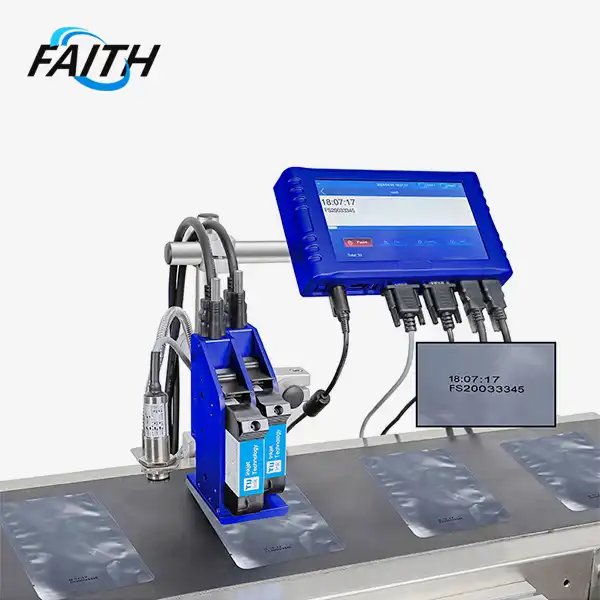
China's fully automatic online inkjet printing market offers sophisticated solutions for modern manufacturing challenges. Today's Fully Automatic Online Inkjet Printer systems integrate advanced automation, real-time printing capabilities, and intelligent quality control features that streamline production workflows across industries. These systems deliver exceptional reliability while reducing operational costs and improving traceability compliance. Manufacturing professionals worldwide recognize Chinese inkjet technology as a competitive alternative that combines innovation with cost-effectiveness, making it an attractive choice for sourcing managers and production engineers seeking dependable coding solutions.
Understanding Modern Inkjet Technology Evolution
Inkjet technology has transformed dramatically over the past decade, evolving from basic printing systems to sophisticated automation platforms. Modern fully automatic systems incorporate machine learning algorithms and computer vision capabilities that enable real-time quality monitoring and error detection. These advancements allow production lines to maintain consistent output quality while reducing manual intervention requirements.
Signal processing improvements have enhanced print resolution and speed, enabling manufacturers to achieve crisp barcodes and QR codes even at high-speed production rates. Neural networks now power predictive maintenance features, alerting operators before potential equipment failures occur. This technological evolution addresses critical pain points that sourcing managers face when selecting reliable coding equipment.
The integration of optical character recognition (OCR) systems in Fully Automatic Online Inkjet Printer solutions ensures accurate data extraction and verification during the printing process. Advanced pattern-recognition capabilities allow these printers to automatically adapt to various product shapes and surface types. Such intelligent features reduce setup times and minimize production downtime risks, addressing key concerns for engineering managers.
Key Features Driving Industrial Adoption
Automated workflow capabilities distinguish modern inkjet systems from traditional manual alternatives. These systems seamlessly integrate with existing production infrastructure, supporting various communication protocols and software compatibility requirements. Cloud integration features enable remote monitoring and data management, appealing to project managers overseeing multiple facility operations.
High-speed printing performance meets demanding production schedules without compromising quality standards. Advanced image processing algorithms ensure consistent print clarity across different substrates and environmental conditions. These capabilities prove essential for food, beverage, pharmaceutical, and electronics manufacturers requiring precise coding standards.
Semantic analysis features enable intelligent text generation based on production parameters and regulatory requirements. Natural language understanding capabilities allow systems to interpret complex coding instructions and adapt accordingly. Quality control managers appreciate these automated features that reduce human error potential while maintaining compliance standards.
Industry Applications and Use Cases
Food and beverage manufacturers rely on automatic inkjet systems for expiration date coding, lot tracking, and nutritional information printing. These applications demand consistent performance across varying production speeds and package materials. Regulatory compliance requirements make reliable traceability systems essential for avoiding costly recalls and maintaining brand reputation.
Pharmaceutical companies utilize these systems for serialization requirements and anti-counterfeiting measures. The ability to print unique identifiers, batch numbers, and verification codes helps ensure Fully Automatic Online Inkjet Printer authenticity throughout supply chains. Error detection capabilities provide additional security layers that quality control managers require for sensitive medical products.
Electronics manufacturers benefit from precision marking capabilities on circuit boards, components, and finished products. The systems handle small character printing and complex coding patterns that traditional methods struggle to achieve consistently. Automated production line integrators value these capabilities when designing efficient manufacturing workflows.
Evaluating Chinese Manufacturing Advantages
Chinese manufacturers have developed comprehensive production capabilities that support large-scale orders and customization requirements. Advanced manufacturing facilities utilize state-of-the-art equipment and quality control processes that meet international standards. This infrastructure enables competitive pricing while maintaining product reliability that overseas distributors require.
Research and development investments have positioned Chinese companies at the forefront of inkjet innovation. Continuous improvement initiatives result in enhanced product features and expanded functionality that address evolving market needs. Engineering teams collaborate closely with international customers to develop solutions that meet specific application requirements.
Supply chain efficiency enables rapid delivery schedules and responsive customer support. Established logistics networks facilitate smooth international shipping and customs clearance processes. This operational excellence appeals to industrial equipment distributors seeking reliable partnership arrangements with their suppliers.
Technical Specifications and Performance Metrics
Modern automatic inkjet systems achieve print speeds exceeding 508 meters per minute while maintaining precise character formation. Resolution capabilities range from standard text applications to high-definition graphics and complex symbols. These performance specifications enable manufacturers to meet diverse coding requirements without compromising production throughput.
Temperature and humidity tolerance features ensure consistent operation across challenging industrial environments. Vibration resistance capabilities allow installation on high-speed production lines without affecting print quality. Such durability characteristics address concerns that production managers have regarding equipment reliability in demanding applications.
Ink consumption efficiency reduces operational costs while extending maintenance intervals. Advanced nozzle designs minimize clogging issues and reduce cleaning requirements. These features appeal to production teams seeking to minimize downtime and maximize equipment utilization rates throughout extended operating periods.
Integration and Customization Capabilities
Flexible interface options enable seamless integration with various control systems and production management software. Standard communication protocols support connectivity with existing automation infrastructure without requiring extensive modifications. This compatibility reduces implementation costs and simplifies installation processes for engineering teams.
Customization options include specialized ink formulations, modified print heads, and tailored software configurations. OEM and ODM manufacturers benefit from these adaptable solutions that integrate smoothly into their equipment designs. Custom mounting arrangements and control interfaces accommodate unique installation requirements across different industries.
Fully Automatic Online Inkjet Printer solutions offer software compatibility with popular enterprise resource planning (ERP) systems and manufacturing execution platforms. Their data integration capabilities enable comprehensive traceability reporting and production analytics. These features support regulatory compliance while providing valuable insights to drive continuous improvement initiatives
Maintenance and Support Considerations
Preventive maintenance schedules utilize predictive analytics to optimize service intervals and component replacement timing. Remote diagnostic capabilities enable technical support teams to identify potential issues before they impact production operations. This proactive approach minimizes unexpected downtime that concerns production managers.
Modular component designs facilitate rapid replacement and reduce repair complexity. Standardized parts inventory requirements simplify maintenance planning and reduce carrying costs. Technical documentation and training resources support local maintenance teams in performing routine service procedures independently.
Global support networks provide responsive assistance across different time zones and languages. Technical expertise covers application-specific challenges and optimization opportunities. This comprehensive support structure addresses concerns that overseas buyers have regarding after-sales service quality and availability.
Cost Analysis and Return on Investment
Initial equipment costs reflect sophisticated technology features and robust construction quality that ensures long-term reliability. Operational savings emerge from reduced labor requirements, improved efficiency, and lower maintenance costs compared to alternative solutions. These financial benefits appeal to sourcing managers evaluating total cost of ownership across multi-year periods.
Energy efficiency features reduce utility consumption while maintaining full performance capabilities. Ink consumption optimization minimizes ongoing material costs without affecting print quality standards. Production efficiency improvements generate additional savings through increased throughput and reduced waste generation.
Return on investment calculations typically demonstrate payback periods under two years for high-volume applications. Reduced compliance risks and improved traceability capabilities provide additional value that quality control managers recognize. These financial advantages make automatic inkjet systems attractive investments for forward-thinking manufacturers.
Conclusion
China's fully automatic online inkjet printer market offers compelling solutions for modern manufacturing challenges. Advanced automation features, intelligent quality control, and comprehensive customization capabilities address critical pain points that sourcing managers and production professionals face daily. The combination of technological innovation, competitive pricing, and reliable support makes Chinese manufacturers attractive partners for international buyers seeking dependable coding solutions. As regulatory requirements continue evolving and traceability demands increase, investing in sophisticated automatic inkjet systems becomes essential for maintaining competitive advantages in global markets.
Partner with Faith Technology for Your Fully Automatic Online Inkjet Printer Needs
Shenyang Faith Technology Co., Ltd. stands as a trusted Fully Automatic Online Inkjet Printer manufacturer with over a decade of innovation in industrial coding solutions. Our comprehensive product portfolio includes CIJ printers, PIJ printers, and large character systems designed to meet diverse manufacturing requirements. With experience serving 200,000+ customers across 126 countries, Faith delivers proven reliability that production managers and sourcing professionals value.
Our 2,500 square meter manufacturing facility supports large-scale production and OEM/ODM customization services. Technical excellence combines with competitive pricing to deliver exceptional value for overseas distributors and industrial automation integrators. Two-year warranty coverage and 24-hour technical support ensure smooth operations throughout equipment lifecycles.
Ready to explore how Faith's automatic inkjet solutions can enhance your production capabilities? Our technical team stands ready to discuss your specific application requirements and recommend optimal configurations. Contact us at sale01@sy-faith.com to schedule a consultation and discover why leading manufacturers choose Faith Technology for their coding and traceability needs.
References
1. Industrial Printing Technology Association. "Global Market Analysis of Automatic Inkjet Systems 2024." Industrial Printing Quarterly, Vol. 15, No. 3, 2024.
2. Manufacturing Automation Institute. "Trends in Chinese Industrial Equipment Export Performance." International Manufacturing Review, 2024.
3. Packaging Technology Research Foundation. "Comparative Study of Inkjet Printing Solutions for High-Speed Production Lines." Journal of Packaging Technology, Vol. 28, 2024.
4. International Standards Organization. "Quality Standards for Industrial Coding and Marking Equipment." ISO Technical Report 2024-07, 2024.
5. Asian Manufacturing Excellence Council. "Best Practices in Industrial Inkjet Implementation." Manufacturing Excellence Handbook, 2024 Edition.
6. Global Traceability Systems Alliance. "Regulatory Compliance Requirements for Product Coding Systems." Compliance Standards Guide, 2024.
_1761190740145.jpg)
_1762156801600.jpg)