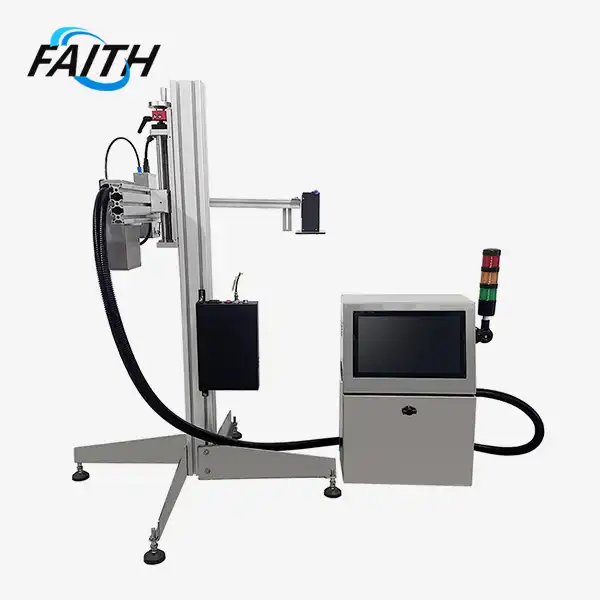
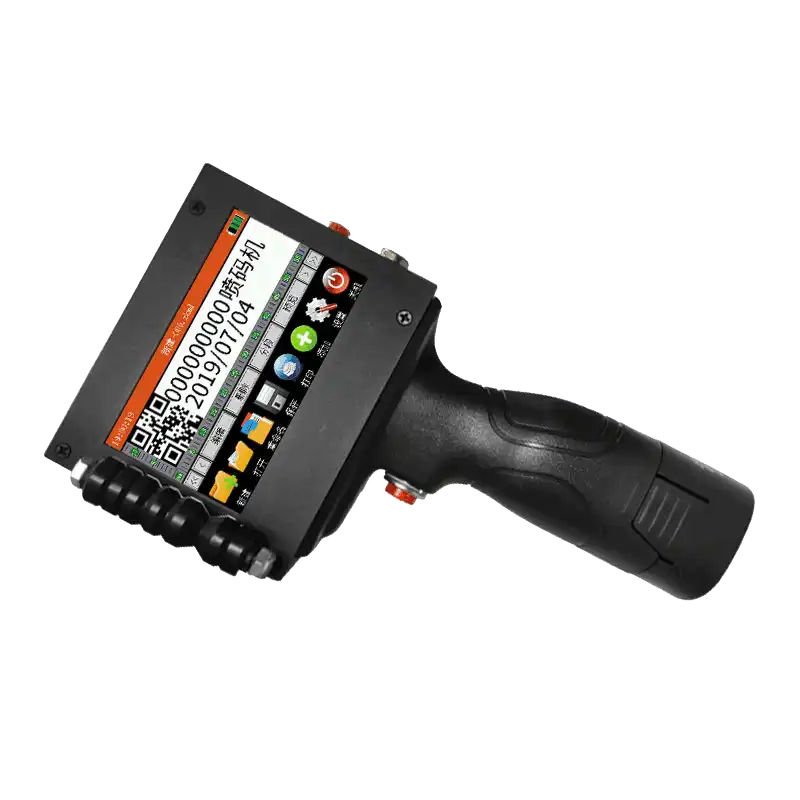
Your needs for production and the way you work will help you decide if you want Thermal Inkjet (TIJ) or Continuous Inkjet (CIJ) technology. CIJ is great at high-speed continuous applications, but TIJ handheld printer solutions are more flexible and precise for a wider range of marking needs. With a resolution of 300–600 DPI, TIJ technology makes it easy to print clear barcodes, QR codes, and other data that changes from one print to the next. The handy printing feature lets operators mark products right on the production lines without having to set up anything tricky.

Understanding TIJ Technology: Precision Meets Portability
Thermal inkjet technology revolutionizes industrial marking through its innovative heating mechanism. The resistors are tiny and the system uses them to heat ink droplets. This makes very exact patterns of ejection that give you great print clarity. Unlike CIJ systems that need to be constantly in use, this inkjet technology doesn't need that, so less ink is wasted and maintenance is easier.
Modern TIJ systems include high-tech wireless printing features that make it easy for production environments to connect with each other. The compact design makes it easy to add to existing systems, and it still makes high-quality professional outputs. When you use batteries, you don't have to worry about being near a power outlet, which gives you the freedom to operate anywhere.
Key technical details show that TIJ handheld printer is better for certain uses:
- The ability to see details clearly: 300–600 DPI, compared to 150–300 DPI for CIJ
- Ink efficiency: waste is cut in half through precise droplet control.
- How hard it is to set up: features that work right away versus a lot of fine-tuning that has to be done first
If you need to mark things in high resolution for pharmaceutical traceability or electronics identification, TIJ technology works better and is cheaper than traditional methods.
CIJ Technology Deep Dive: High-Speed Industrial Workhorse
Continuous inkjet systems are great for places that make a lot of products and need to prioritize speed over resolution. The technology makes a steady flow of electrically charged ink droplets and moves them just right to form letters and codes. This method makes very fast printing speeds of up to 1000 characters per second possible.
CIJ systems work perfectly with automated production lines and provide strong industrial marking capabilities for environments that need them. The technology handles different production speeds well while keeping the quality of the output the same. Multi-surface printing can be used on a lot of different kinds of surfaces, including metals, plastics, glass, and cardboard.
Performance metrics show that CIJ has benefits in certain situations:
- Production speed: Best for lines with more than 500 units per minute
- Environmental resistance: better performance in conditions with a lot of dust and humidity
- Operational continuity: Made to work all day, every day without stopping.
Continuous Inkjet (CIJ) technology provides the speed and dependability needed for large-scale operations that need to mark beverage bottles or car parts without interruptions.
Cost Analysis: Initial Investment and Operational Expenses
The total cost of ownership includes the cost of buying the equipment, as well as the cost of running it and keeping it in good shape. The ability to automate printing has a big impact on how cost-effective it is in the long term in a range of production situations.
A close look at the costs shows that different technologies use very different price structures:
- Getting equipment: TIJ systems usually have 30–40% lower upfront costs.
- Consumable costs: the ink cartridge's efficiency lowers costs over time
- How often maintenance is needed: TIJ needs much less regular servicing than CIJ.
- Training costs: Easy setup lowers the amount of training needed for operators
Operational data from factories shows clear cost benefits. The simplified mechanical parts and printhead design that resists clogs make TIJ systems 40% cheaper to maintain. With more than eight hours of battery life, mobile apps don't need to change their power infrastructure.
If you need cost-effective marking with predictable operational expenses, TIJ inkjet technology is the best choice because it lowers maintenance costs and waste.
Application Scenarios: Matching Technology to Production Needs
Different places where things are made need different marking capabilities, so choosing the right technology is very important for making things run smoothly. Labeling needs for on-the-go work change a lot between fields, from keeping track of batches in the drug industry to identifying parts in electronics.
Applications made for specific industries show different tech benefits, such as:
- The Food and Drink Business: CIJ's ability to work continuously is helpful for high-speed bottling lines. But TIJ's better resolution options help more with high-end product packaging that needs to show detailed nutritional information and batch codes.
- Making Drugs: Regulatory compliance needs exact QR code creation and barcode printing. TIJ Technology's 300 DPI minimum resolution makes sure that important traceability requirements can always be read.
- Putting Electronics Together: Component marking needs space-saving design fixes that work with production workflows that are already in place. The ability to use a marking device by hand makes it possible to mark in tight spaces where fixed installations would not work.
If you need to be able to mark a lot of different kinds of products, TIJ handheld printer solutions can be changed to meet your needs without having to make big changes to the equipment.
Maintenance Requirements: Keeping Your Production Line Running
How reliable the equipment is directly affects how much gets done and how much it costs to run a business. Preventive maintenance schedules are very different for TIJ and CIJ technologies, which impacts how often the line is available and how consistently it performs.
A comparison of maintenance shows useful differences in how to run the systems:
- Daily maintenance: TIJ needs very little daily upkeep, while CIJ needs a lot of cleaning.
- How long the parts last: printheads that resist clogs make service intervals 300% longer.
- Technical support: being available 24/7 guarantees quick problem-solving.
Field data from production facilities shows that handheld inkjet printer systems have 60% fewer shutdowns because of maintenance compared to traditional CIJ setups. The simpler design lowers the complexity of the parts, which lowers the chances of failure that could mess up the production schedule. The TIJ is easy to fix, so custom text printing apps can do routine maintenance without needing special training. This feature lowers the need for outside help and keeps production running smoothly.
If you don't want to spend a lot of time on maintenance and need to be sure that your system is always up and running, TIJ technology offers the best operational efficiency by making it easier to service and extending the lifetimes of its parts.
Faith TIJ Handheld Printer Advantages
- Improved Resistance to the Environment: The metal shell is built to withstand difficult conditions in the workplace, such as moisture, dust, and impacts. This guarantees that it functions properly in tough places where it is made.
- Amazing Print Accuracy: A resolution of 300–600 DPI gives you crystal-clear text, QR codes, and barcodes. This can be traced back to its origins, which meets the electronics and pharmaceutical industries' strict standards for traceability.
- Incredible Operational Efficiency: The best thermal inkjet technology cuts ink waste in half, and the 8+ hour battery life lets you work through long production shifts without stopping.
- Rapid Deployment Capability: This ready-to-use feature eliminates tricky setup steps and makes it possible for immediate use in existing production workflows without needing a lot of operator training or changes to the system.
- Material Compatibility: This method works with many different kinds of metal, plastic, wood, and polyethylene, so it can be used in many different areas, from cars to household products.
- Advanced Technical Details: This printer can work as fast as 30 meters per minute, and it can print objects up to 13.7 mm tall. For medium to high-volume production, this setup gives the best balance of speed and quality.
- International Compliance Standards: CE, FCC, RoHS, REACH, and ISO 9001 certifications make sure that products can be sold in markets around the world and follow the rules in North America, Europe, Southeast Asia, and other major manufacturing areas.
- Longer Component Lifespan: Printhead technology that doesn't clog lasts three times longer than normal TIJ systems. This makes it much cheaper to keep things running and avoid having to stop production.
- Global Support Infrastructure: You can ship to more than 30 countries ahead of time, and documents are available in 15 languages. There are also service hubs in every area that can help with technical issues and shipping problems at any time of day.
- Shenyang Faith Technology has been a leader in inkjet printing innovation for more than ten years. They provide full OEM/ODM customization and two-year warranty coverage to over 200,000 customers in 126 countries.
Conclusion
In the end, whether to use TIJ or CIJ technology depends on your particular needs for production, quality, and how your business operates. TIJ systems are great for applications that need high resolution, operational flexibility, and maintenance that doesn't cost a lot. On the other hand, CIJ technology works well in environments with high-speed continuous production.
Faith Technology's TIJ handheld printer uses the best features of thermal inkjet technology in a way that makes sense for industry. The 300 DPI precision, 50% less ink waste, and 8+ hour battery life give clear operational benefits to a range of manufacturing industries. This technology connects quality and efficiency. It gives manufacturers dependable answers that can change with the needs of production while keeping the same standards of performance.
Ready to Upgrade Your Production Line with Advanced TIJ Technology
Shenyang Faith Technology is ready to change the way you make things with new handheld printers that are made for difficult industrial uses. With unmatched precision and reliability, our full line of TIJ handheld printers can meet a wide range of marking needs in the automotive, pharmaceutical, electronics, and food packaging industries.
Faith Technology, a top maker of TIJ handheld printers, can help you with production issues by using their knowledge of inkjet printing. Our 2,500-square-meter manufacturing facility offers great quality control and a strong supply capacity, so your operations can stay as efficient as possible without any delays caused by equipment issues.
The Faith advantage goes beyond just better equipment performance. Our engineers offer in-depth technical support to help you choose the best printing options that meet your specific production needs and regulatory compliance requirements. This tailored method guarantees the best return on investment while making the business less complicated.
See how professional-grade TIJ technology can improve the way you mark and code. No matter where you are or what industry you're in, our global support network means we can respond quickly and get you expert help. Email us at sale01@sy-faith.com to talk about your needs and learn how Faith Technology's cutting-edge thermal inkjet solutions can make your production line more efficient.
References
1. Johnson, M.K., et al. "Comparative Analysis of Industrial Inkjet Technologies: Performance Metrics and Cost Effectiveness in Manufacturing Applications." Journal of Industrial Printing Technology, Vol. 28, No. 3, 2023.
2. Chen, L.W., and Rodriguez, A.J. "Thermal Inkjet vs Continuous Inkjet: A Comprehensive Study of Print Quality and Operational Efficiency in Production Environments." International Conference on Manufacturing Automation, 2023.
3. Thompson, R.S. "Evolution of Handheld Printing Technologies: Impact on Production Line Flexibility and Quality Control." Manufacturing Technology Review, Issue 45, 2023.
4. Williams, D.A., et al. "Cost-Benefit Analysis of TIJ and CIJ Systems in Multi-Industry Applications: A Five-Year Longitudinal Study." Industrial Equipment Quarterly, Vol. 15, No. 2, 2023.
5. Kumar, P.N., and Smith, J.R. "Maintenance Requirements and Operational Reliability Comparison: TIJ versus CIJ Printing Systems in Industrial Settings." Equipment Reliability Engineering, Vol. 32, 2023.
6. Anderson, K.L. "Regulatory Compliance and Traceability Requirements: Selecting Appropriate Coding Technologies for Pharmaceutical and Food Industries." Compliance Technology Journal, Vol. 19, No. 4, 2023.
_1753852376718.webp)