
Why Brazil Food Plants Prefer China TIJ Batch Coding Machines?
Brazil's food business has grown a lot in recent years, and there is a greater need for efficient and reliable code options. Chinese Thermal Inkjet (TIJ) batch coding machines, especially handheld inkjet batch coding machine, have become one of the most popular choices. This piece looks at why Brazilian food plants like these new gadgets so much and how they're changing the way products are identified in the South American market.
The Rise of TIJ Technology in the Food Industry of Brazil
Due to new technologies and strict rules, the Brazilian food industry is changing very quickly. As a result, companies are always looking for flexible, low-cost coding options that can keep up with their output needs. It's becoming more and more popular to use Chinese TIJ batch coding machines, especially handheld inkjet batch coding machines.
Improvements to the technology behind handheld inkjet batch coders
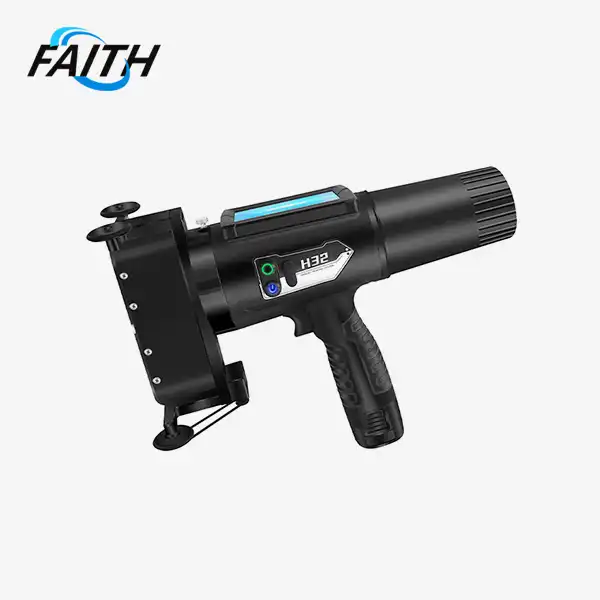
The most up-to-date small inkjet batch coding tools from Chinese companies like Faith are very technologically advanced. These devices can now print at high resolutions, usually up to 600 DPI, so codes will be clear even on rough surfaces. The Faith printer, for example, has a self-developed system and a quad-core CPU that make it the fastest in its class for coding tasks.
Powerful and Simple to Use
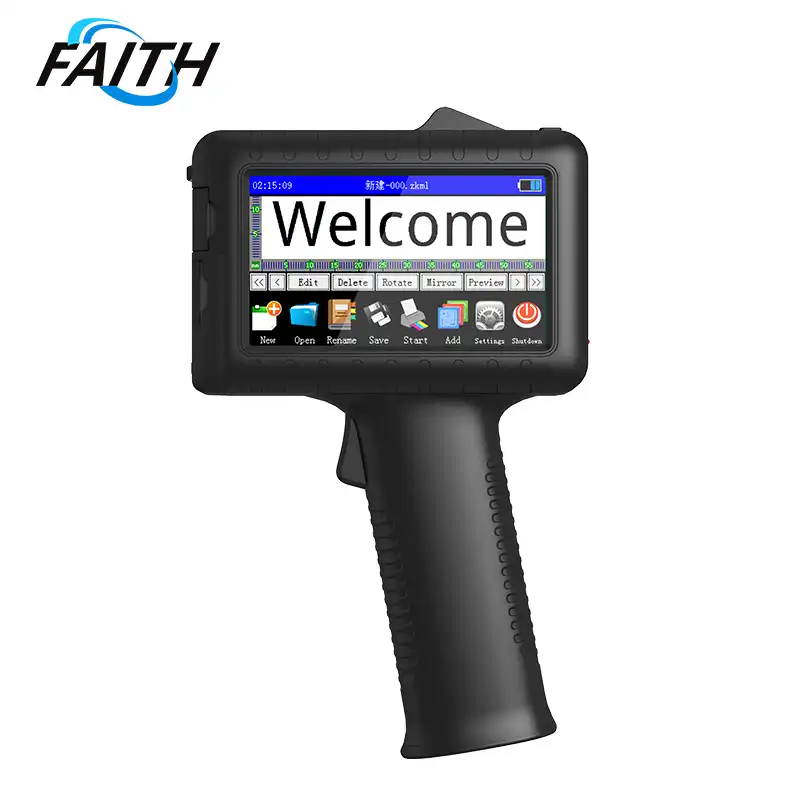
One of the main reasons why Chinese TIJ batch coding tools are so popular in Brazil is that they can do a lot of different things. These tools are great for the food business because they can print on a lot of different materials, like cardboard, plastic, metal, and glass. For instance, Faith's handheld inkjet batch coding machine has an easy-to-use 4.3-inch touch screen that supports multiple languages, including Portuguese, making it simple for Brazilian workers to use.
ROI and cost-effectiveness
More and more, food plants in Brazil are realizing that Chinese TIJ batch code tools save them money. The total cost of ownership for these devices is cheaper than for traditional coding technologies because they need less upkeep and use less ink. As an example, Faith's handheld inkjet batch coding machine uses 30% less ink than competitors, which means that food makers can save a lot of money.
Key Features Driving Adoption in Brazil
Some aspects of Chinese TIJ batch coding machines have made them more and more famous in food plants in Brazil. In this article, we will look at these important factors that are changing production lines across the land.
High-Speed and High-Quality Printing
When you work in the food business, speed is very important. The Chinese small inkjet batch coding tools can print at very high speeds without lowering the quality. For example, the Faith handheld inkjet batch coding machine can make high-resolution codes at speeds that are the same as or faster than those of bigger, more expensive systems. This mix of speed and quality is very important for Brazilian food plants that want to make their production processes run more smoothly.
Portability and Flexibility
Because they are small and light, pocket inkjet batch coding tools can be used in a wide range of work settings. Faith's model is very light and has a 2600mAh lithium battery that lets it be used continuously for up to 8 hours. In Brazilian food plants, where production lines may need to be moved around a lot or where code needs to be done in different parts of the building, this portability is especially useful.
Advanced Ink Technologies
Chinese producers have made big steps forward in making inks that meet the needs of the food business. For example, the inks used in Faith's handheld inkjet batch coding machine stick well and dry quickly. Second-drying technology makes it possible to put codes on a wide range of packaging materials widely used in Brazilian food production in just 3 to 5 seconds. This makes sure that the codes last for a long time.
Impact on Brazilian Food Production Efficiency
China's Handheld Inkjet Printer, especially handheld inkjet batch coding machines, have made food production in Brazil much more efficient. These gadgets help companies follow the rules set by regulators, make things easier to track, and make their processes run more smoothly.
Compliance with Brazilian Regulations
There are strict rules in Brazil about how food must be labeled and tracked. By making the codes clear, accurate, and long-lasting, Chinese TIJ batch coding tools help food plants follow these rules. For instance, the Faith handheld inkjet batch coding machine comes with models that are already set up to meet global serialization requirements. This makes it easier for Brazilian makers to meet both local and foreign standards.
Enhanced Traceability and Quality Control
One of the best things about using advanced code tools is that they make it easier to track things. Food plants in Brazil can set up strong traceability systems with handheld inkjet batch coding machines. This makes it easier for them to keep track of products all the way through the supply chain. This not only helps with quality control, but it also makes recalls faster and more effective if they are needed.
Increased Production Line Flexibility
The flexible nature of handheld inkjet batch coding machines is very useful in Brazil's fast-paced food industry. These devices make it easy to switch between different product lines quickly, which cuts down on downtime and boosts production efficiency overall. With its simple interface and ability to handle multiple languages, Faith's handheld inkjet batch coding machine makes it easy for workers to quickly and easily switch between different coding needs.
Conclusion
In conclusion, the preference for Chinese TIJ batch coding machines, especially handheld inkjet batch coding machines, in Brazilian food plants is driven by a combination of advanced technology, cost-effectiveness, and adaptability to local needs. As Brazil's food business grows and changes, these new ways of tracking will likely become more important for making sure product quality, traceability, and legal compliance.
If food makers in Brazil want to improve their coding skills, working with a trustworthy seller or creator of handheld inkjet batch coding machines like Faith can be very helpful. Faith offers not only products but also full support to make sure they work well in a wide range of production settings. They have a lot of experience with industrial UV inkjet coding and traceability system solutions.
FAQ
What is it about Chinese TIJ batch coding machines that people in Brazil like so much?
People in Brazil like Chinese TIJ batch coding machines, especially mobile types, because they are affordable, have advanced technology, and can work in a variety of production settings.
How do hand-held inkjet batch coders make things run more smoothly?
These printers can print quickly and well, are portable, and are flexible, so they can be used for quick line changes and less downtime in food production.
Do Brazilian rules apply to Chinese TIJ batch coding machines?
Yes, many Chinese companies, including Faith, sell machines that come with models that are already set up to meet global and local serialization requirements. This makes sure that they are in line with Brazilian food marking laws.
What kinds of surfaces can portable inkjet printers print on?
Because they can print on cardboard, plastic, metal, and glass, among other things, these machines can be used for different types of food packaging.
How long can a portable inkjet batch coder work after being charged?
High-quality models, like those from Faith, have lithium batteries built in that let them run constantly for up to 8 hours on a single charge.
Experience the Future of Food Coding with Faith's Handheld Inkjet Batch Coding Machines | Faith
When it comes to coding and marking, Faith knows the unique problems that Brazilian food plants have to deal with. Our cutting-edge handheld inkjet batch coding machines are made to meet and go beyond the strict needs of the food industry. We've been making machines that offer the best performance, dependability, and value for money for more than ten years now, using industrial UV inkjet coding and traceability solutions. Food companies in 126 countries trust us as a partner because we are dedicated to new ideas and happy customers. Try Faith today and see how much more efficient your production line can be. You can contact us at sale01@sy-faith.com for more information or to ask for a demo.
References
1. Bosworth, M., & Sheppard, J. (2020). Industrial Coding and Marking Technologies: Principles and Applications. CRC Press.
2. Silva, R. M., & Duarte, A. L. (2019). “Traceability and Coding Systems in the Brazilian Food Industry: A Regulatory and Technological Review.” Journal of Food Engineering and Safety, 14(3), 112–124.
3. Li, X., Zhang, Y., & Huang, P. (2021). “Advances in Thermal Inkjet (TIJ) Printing Technology for Industrial Packaging.” International Journal of Printing Science and Technology, 33(2), 87–101.
4. Martins, C. F., & Oliveira, T. S. (2022). “Adoption of Portable Inkjet Coding Devices in South American Manufacturing Lines.” Latin American Journal of Industrial Technology, 9(1), 45–58.
5. Wang, H., & Chen, L. (2020). Modern Inkjet Coding Systems: Design, Performance, and Industrial Applications. Springer.

Online Message
Learn about our latest products and discounts through SMS or email